
The Waterbury Time|Published Oct 13, 2025
UPDATED NOV 21, 2025 7:12AM
Waterbury, CT- There’s a conversation this country hasn’t had yet — at least not being real about it. It’s about who has the moral right to define what immigration means in America.
And I’m beginning to believe that no group has earned that right more than Black Americans.
We, the descendants of enslaved Africans, are the only population that didn’t arrive by choice, treaty, or invitation. We were forced here — stolen, sold, and scattered — yet we built the backbone of a nation that has never stopped asking us to prove our belonging. We are America’s original “outsiders,” forced to become insiders through labor, law, and endurance. And that gives us a perspective on migration that no other group can fully claim.
Opinion: Libraries Should Be for Learning, Not Loopholes in Waterbury
When you really look at it, every other journey to America is either celebrated or criminalized — depending on who’s traveling.
The European voyage is glorified: pilgrims, pioneers, settlers, explorers. Their immigration story is told as destiny and bravery.
But for everyone else — the enslaved African, the indigenous person forced from their homeland, the modern immigrant from Africa, Latin America, or the Caribbean — the story is retold as a problem or a threat.
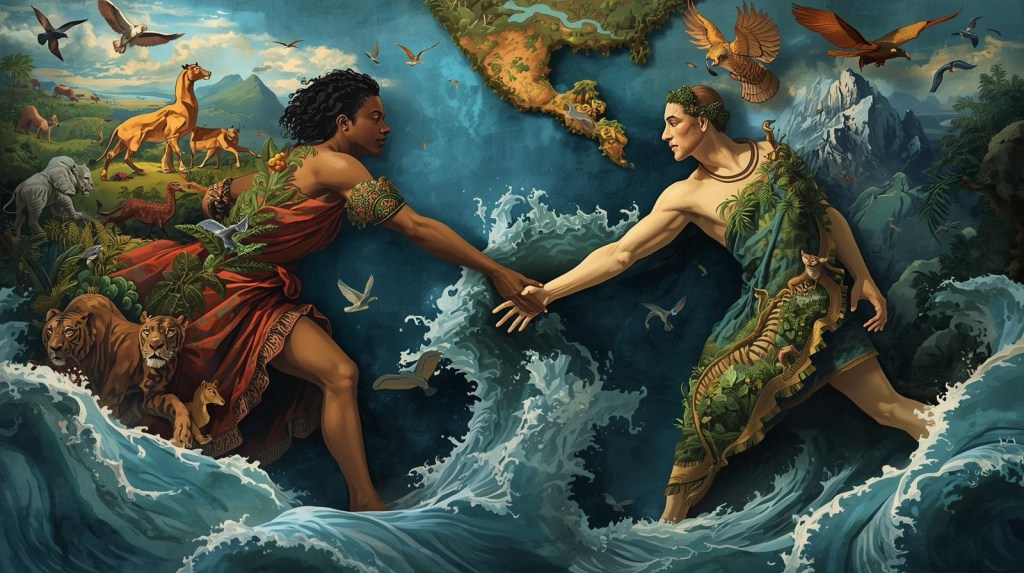
The truth is, most of the world’s migrants share something deeper with Black Americans than we’re often allowed to see. Many of today’s immigrants if they were trace lineage would come from the same West African regions we descend from, or from Indigenous nations of the Americas, connected across the Western Hemisphere long before borders existed. We are, in a real sense, distant relatives of the same migrations that shaped the human story. The only barrier that separates us is language — not experience, not struggle.
That’s why I find it strange when national debates on immigration unfold without serious attention to what Black America thinks or feels about it. Too often, we’re treated like bystanders in a conversation that directly intersects with our own historical trauma.
We know what it means to have your family separated, your labor exploited, your identity questioned, and your humanity legislated.
We know what it’s like to build a country and still be treated like you just arrived.
Opinion & Editorials | Waterbury Times – Local Perspectives and Analysis
If we’re being honest, the descendants of Europe are the only people on this side of the world who had a home to go back to.
They came here voluntarily, seeking opportunity or empire — and we celebrate that as courage. But the journeys of everyone else — enslaved Africans, displaced Indigenous peoples, modern migrants fleeing poverty or war — are treated as violations of the “American order.”
It’s a moral contradiction that only a country with selective memory could maintain.
The conversation we need isn’t just about border policy or visas. It’s about who gets to belong, who gets to be seen as a builder versus a burden.
And in that conversation, Black Americans bring something no other group can: the full historical arc from captivity to citizenship. We understand both the pain of displacement and the responsibility of nation-building.
We’ve lived through being seen as both the labor and the threat — and we turned that pain into progress.
📰 OPINION: Connecticut’s Violence Problem — Should the Death Penalty Return?
So maybe it’s time to recognize that Black America is not a spectator in the immigration debate.
We are the living proof of what forced migration looks like, what endurance demands, and what true belonging should mean.
Our voice isn’t just relevant — it’s foundational.
Because until this country listens to the people who were never meant to be here but became essential to its survival, America will keep misunderstanding what it means to arrive, to struggle, to belong, to being an American.
HAVE SOMETHING TO SAY? We will PUBLISH IT!
 The Waterbury Times- Waterbury,CT Local News
Leave a comment