
By D.M.Livingston|The Waterbury Times|Published Dec 6, 2025
If it feels like liquor stores, bars, and restaurants serving alcohol are everywhere in Waterbury, you’re not imagining it.
Today, a business can usually open with a liquor permit almost anywhere zoning allows, with far fewer distance restrictions than in past generations.
But historically, Connecticut had strict spacing rules that controlled where alcohol could be sold — and an old CT Supreme Court case proves it.
BACK THEN: THE 1,500-FOOT Rule
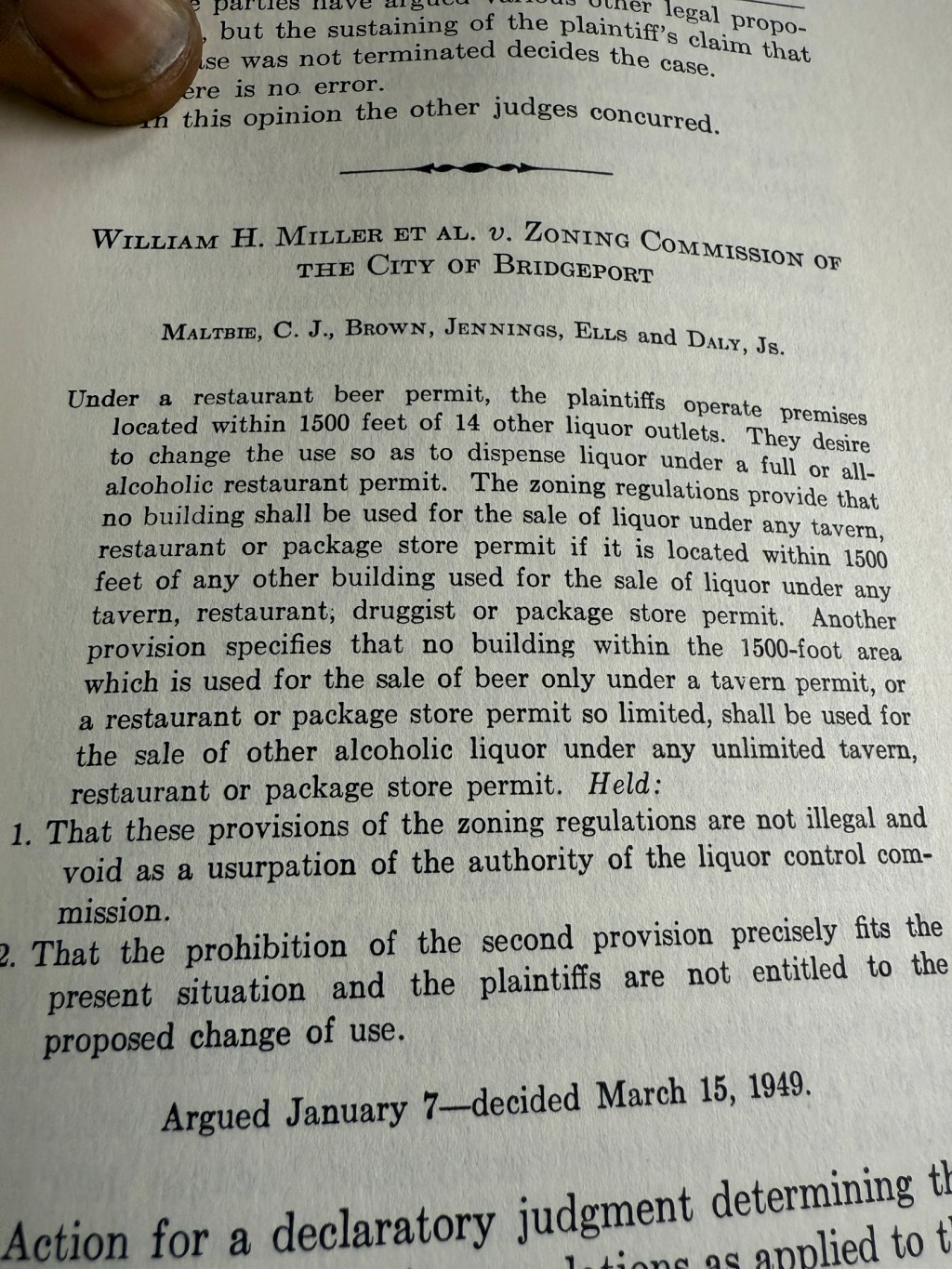
In 1949, the Connecticut Supreme Court decided a case called Miller v. Zoning Commission of Bridgeport.
The rule at the time was simple and strict:
No building could be used to sell alcohol if it was within 1,500 feet of another place already selling alcohol.
Even a restaurant that already had a beer permit was not allowed to upgrade to a full liquor permit if it sat inside the 1,500-foot zone.
The Court upheld the rule, saying towns had the legal right to control “liquor density” through zoning.
This wasn’t just Bridgeport — Waterbury, Hartford, New Haven, Meriden, Torrington, and others all had similar distance rules in their zoning codes.
The goal was to prevent:
- clusters of bars
- too many package stores in one neighborhood
- “overconcentration” of alcohol outlets
- noise, loitering, and heavy foot-traffic zones
For decades, that was normal life in Connecticut.
WHAT CHANGED: THE STATE BACKED AWAY
Connecticut eventually scrapped statewide distance requirements between liquor establishments.
Modern statutes (like CGS § 30-22) do not impose 1,500-foot spacing anymore.
The state now focuses mostly on:
- age limits
- permits
- number of package stores allowed per town
- compliance and enforcement
Everything else — including distance rules — is a local zoning decision.
Over the last 10–15 years, many Connecticut towns dropped their spacing rules, including:
- Newington
- Torrington
- Several Shoreline communities
- Some smaller valley towns
They removed 1,000-foot and 1,500-foot rules to make commercial development easier.
WATERBURY TODAY: “YOU CAN BUY LIQUOR ANYWHERE”
Waterbury, like many cities, now has far fewer distance restrictions than it used to.
This is why:
- Package stores can sit blocks apart
- Restaurants have few barriers to adding alcohol
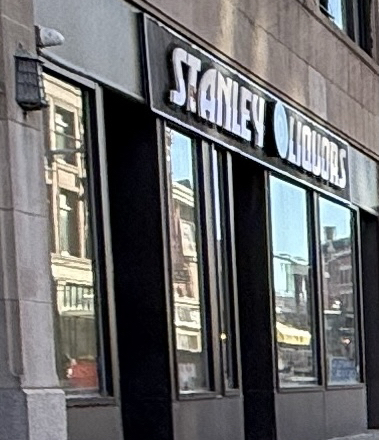
- Pockets like the South End, North End, Waterville, Downtown, and East Main have heavy liquor density
- Convenience stores, gas stations, and bodegas often hold beer permits
When people say,
“Man, there’s a liquor store on every corner,”
they’re describing the modern landscape after the old rules fell away.
WHY THIS MATTERS
Understanding cases like Miller (1949) helps explain how dramatic the change really is.
There was a time — not long ago — when zoning literally blocked new alcohol permits if a competitor was too close.
Today?
A business in Waterbury mostly needs:
- the right zoning,
- a willing landlord,
- and state approval.
The old barriers are gone.
BOTTOM LINE
Waterbury didn’t suddenly decide to flood the city with liquor stores.
What changed was the law — specifically, the disappearance of old 1,500-foot separation rules that once controlled where alcohol could be sold.
The 1949 case shows how strict the system used to be.
Recent state-level and town-level zoning changes explain why the map looks so different today.
 The Waterbury Times- Waterbury,CT Local News
Leave a comment