
The Waterbury Times|Published May 4, 2026
WATERBURY, CT — Every year, outside financial experts take a hard look at the City of Waterbury’s finances and ask a simple question:

Can this city be trusted to manage money and pay its bills?
In 2026, the answer was yes—again.
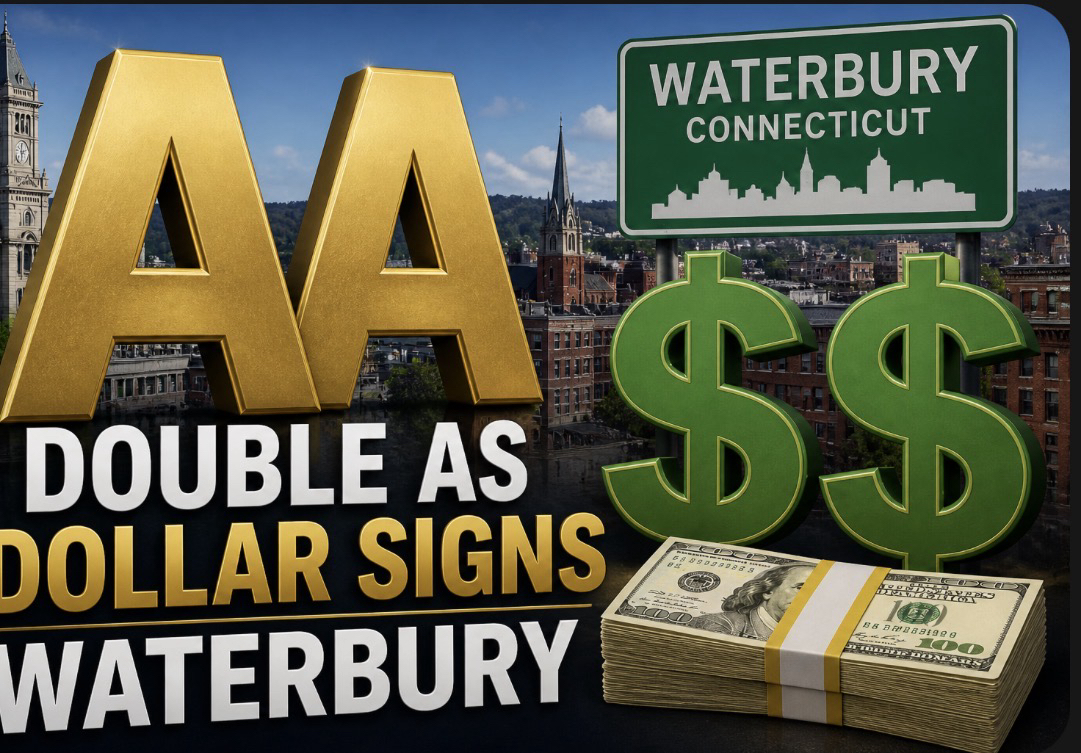
The Kroll Bond Rating Agency (KBRA) reaffirmed Waterbury’s AA bond rating with a Stable Outlook, placing the city in a strong financial position compared to many municipalities across the country.
But beyond the headlines, this rating isn’t about Wall Street—it’s about Main Street.
Mayor Paul K. Pernerewski, Jr. said the rating reflects years of deliberate fiscal strategy.
“This continued AA rating is a direct reflection of the disciplined financial management and forward-looking policies we have put in place,” the mayor said. “We have made difficult but necessary decisions to strengthen our financial position while continuing to invest in economic development, infrastructure, and the long-term stability of our community.”
What an “AA” Rating Really Means
Think of it like a credit score for the city.
- AAA = elite, near-perfect
- AA = strong, reliable, trusted
Waterbury sits just below the top tier—but firmly in the category of cities that are seen as financially responsible and dependable.
That matters because:
* The better the rating, the less interest the city pays when borrowing money
* Lower borrowing costs = more money saved over time
* Savings can go toward services, schools, roads, and tax stability
Why Waterbury Earned It
This rating didn’t happen overnight. It reflects years of decisions, including:
- Spending within its means instead of overextending
- Building up savings (reserves) for emergencies
- Planning ahead, not just year-to-year
- Staying disciplined with major obligations like pensions
In plain terms:
The city has been acting less like it’s reacting to problems—and more like it’s preparing for them
What’s Working in Waterbury Right Now
Several key factors are strengthening the city’s position:
1. Economic Development Is Moving
Projects like downtown redevelopment and large-scale investments (like the Amazon facility) signal growth.
Growth means jobs, activity, and a broader tax base over time
2. The Hospital Situation Stabilized
The acquisition of Waterbury Hospital by UConn Health brought:
- A short-term boost in tax revenue (2026)
- Long-term stability for a major community institution
Caveat; But there’s a tradeoff: the property will become tax-exempt, meaning less tax revenue in the future
3. Financial Discipline Has Been Consistent
This is what rating agencies care about most:
Not one good year—but a pattern of responsible behavior over time
Finance Director Michael LeBlanc emphasized the city’s long-term approach.
“The City’s financial strategy is grounded in conservative budgeting, strong internal controls, and long-term planning,” LeBlanc said. “The affirmation of this rating validates this approach and underscores a commitment to maintaining structural balance, strengthening reserves, and meeting all financial obligations.”
The Challenges That Haven’t Gone Away
This is not a victory lap—it’s a progress report.
Waterbury still carries:
- Debt from past obligations
- High pension costs
- Retiree benefit (OPEB) liabilities
These are long-term pressures that don’t disappear quickly
The difference now is they are being managed, not ignored
What “Stable Outlook” Really Signals
“Stable” doesn’t mean stagnant—it means predictable.
Experts are essentially saying:
- No major financial trouble is expected
- No immediate jump to a higher rating either
- The city is on a steady, controlled path
Why This Matters to Residents
This isn’t abstract—it affects everyday life:
- Tax pressure: Strong finances can help avoid sharp tax increases
- City services: Stability supports consistent funding for schools, police, fire, and public works
- Investment confidence: Businesses are more likely to invest in cities seen as financially sound
In short: this rating helps shape the cost and quality of living in Waterbury
Why This Matters to Leaders and Policymakers
This rating is both:
A validation
It confirms that recent financial strategies are working.
And a warning
It can be lost.
Poor decisions, short-term thinking, or fiscal backsliding can undo years of progress
The Bottom Line
Waterbury is no longer defined solely by its past financial struggles.
It is now:
- Stable
- Improving
- Being taken seriously by financial institutions
But the next chapter depends on one thing:
Whether the discipline that got the city here continues
The Real Question Moving Forward
Not “How did we get here?”
But: “What decisions will keep us here—or take us higher?”
This rating is a reflection of discipline—but it’s also a test.
Will city leadership protect this progress, or drift back into old habits?
Residents should be watching closely—because the cost of mismanagement is always paid by the public.
Leave a Reply