
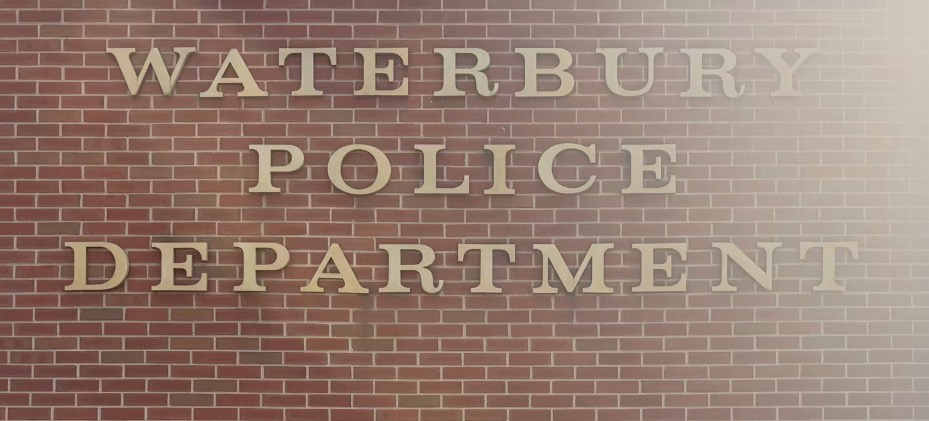
A Waterbury prostitution operation puts a local spotlight on a statewide problem that officials say reaches every Connecticut county.
The Waterbury Times|CT Urban Affairs|Sept 4, 2026|
WATERBURY — A recent prostitution operation on Grove Street has once again put commercial sex activity in the spotlight in Waterbury. But behind the arrests is a larger question facing communities across Connecticut:
How much of the prostitution activity being uncovered is connected to human trafficking — and how effectively are authorities identifying victims and the people exploiting them?
On Aug. 31, Waterbury police conducted an operation on Grove Street that resulted in multiple prostitution arrests. The operation was handled by the department’s Vice and Intelligence Division following community complaints.
The arrests themselves do not establish that those involved were trafficking victims or that a trafficking operation was operating on Grove Street.
But Connecticut officials have repeatedly warned that human trafficking is occurring within the state and that identifying victims can be difficult.
The Connecticut anti-trafficking campaign operated through the Office of the Secretary of the State describes trafficking as a statewide issue. Its public information identifies reported trafficking cases in all eight Connecticut counties, with the largest numbers reported in Hartford, New Haven and Fairfield counties.
Nearly Two Months Later, Cause of South Main Street Fire Remains Undetermined
The state’s campaign attributes the higher numbers in those counties in part to population, transportation routes, labor-intensive industries and increased identification and reporting.
That places Waterbury in an important regional context.
Waterbury is located in New Haven County, one of the three counties identified by the state’s campaign as having the highest number of reported trafficking cases.
Prostitution and trafficking are not the same crime
That distinction matters.
Connecticut law enforcement agencies routinely conduct prostitution investigations, but a prostitution case by itself does not prove human trafficking.
Under Connecticut’s definition, human trafficking involves the exploitation of a person for compelled labor or a commercial sex act through force, fraud or coercion. For victims under 18, proof of force, fraud or coercion is not required.
That means investigators looking at prostitution activity may also need to determine whether someone is being controlled, threatened, deceived or otherwise exploited.
The question for Waterbury is therefore not simply how many prostitution arrests are made.
It is whether those investigations are also producing information about traffickers, recruiters, organizers, locations, transportation and potential victims.
Connecticut’s trafficking numbers
In testimony before the Connecticut General Assembly in March 2026, Secretary of the State Stephanie Thomas said that 96 human trafficking cases involving 170 victims were identified in Connecticut during 2024.
Those numbers should not be interpreted as a complete count of trafficking occurring in Connecticut.
Trafficking is an intentionally hidden crime, and identifying victims often depends on law enforcement, health-care workers, social-service providers, schools, businesses and members of the public recognizing warning signs.
The state has consequently been working to build a more coordinated response.
A new statewide response
Connecticut lawmakers approved legislation in 2026 addressing oversight of the state’s efforts to prevent human trafficking.
The legislation became Public Act 26-70 after being signed by Gov. Ned Lamont on May 27.
Among other provisions, the legislation expands the state’s trafficking-response framework, including additional responsibilities involving the Trafficking in Persons Council, training and coordination among state agencies, and requirements concerning children who may be vulnerable to trafficking.
The legislation also requires the Criminal Justice Policy and Planning Division within the Office of Policy and Management to evaluate coordination efforts among state agencies and develop a comprehensive plan, with a report due to legislative committees by Jan. 1, 2027.
That deadline creates another question for communities such as Waterbury:
What will that statewide plan mean on the street?
The regional approach
Connecticut has already established regional models for responding to trafficking.
The Division of Criminal Justice’s Regionalized Human Trafficking Recovery Taskforce of the Greater Hartford Region combines law enforcement, prosecutors, victim advocates, social-service providers and other agencies.
The task force says its mission is to respond to both sex and labor trafficking using a multidisciplinary, trauma-informed approach.
Between 2022 and 2024, the task force reported that the number of human-trafficking investigations in its region increased by more than 200 percent. Since beginning operations, it has directly supported 49 victims — 27 minors and 22 adults.
The task force also accepts referrals from law enforcement, service providers and community members who believe someone may be a trafficking victim.
But the Greater Hartford task force’s listed catchment area does not include Waterbury.
That raises a practical regional question:
What specialized trafficking-response structure serves Waterbury and the rest of New Haven County?
Waterbury sits at a crossroads
Waterbury’s location makes the question particularly relevant.
The city sits in New Haven County and is connected to major transportation corridors, including Interstate 84. State transportation officials have specifically identified the Hartford, New Haven, Waterbury and Fairfield areas in connection with human-trafficking awareness and enforcement during commercial-vehicle inspections.
Transportation is one reason trafficking investigators look beyond individual arrests.
A trafficking operation may involve movement between cities rather than remaining in one location.
That makes regional information sharing important.
A person encountered in a prostitution investigation in Waterbury may have previously been in another Connecticut community. Conversely, a person identified elsewhere could potentially have a connection to Waterbury.
That is why trafficking investigations often require cooperation among municipal police departments, state agencies, prosecutors, victim-service organizations and federal authorities.
What happens after an arrest?
For Waterbury residents, perhaps the most important question is what happens when police encounter someone who may be more than a person committing a prostitution offense.
Are potential victims screened for trafficking?
Are investigators trained to recognize coercion and exploitation?
Are victims connected with housing, medical care, counseling and other services?
And are investigators following the evidence upward to determine whether someone else is organizing or profiting from the activity?
Connecticut law already requires various agencies and professionals to receive trafficking-related training and establishes requirements surrounding trafficking referrals and documentation. State law also includes trafficking-awareness requirements for hotels, motels and similar lodging establishments.
The state’s newer legislation indicates that officials believe additional coordination and oversight are still necessary.
The unanswered Waterbury questions
The recent Grove Street operation provides an opportunity to ask those questions locally.
The Waterbury Times is seeking answers to the following:
How many prostitution investigations conducted by Waterbury police over the past five years have resulted in a human-trafficking investigation?
How many potential trafficking victims have been identified in Waterbury?
How many trafficking investigations have been referred to state or federal authorities?
Does the Waterbury Police Department have officers specifically trained in human-trafficking investigations?
What screening process is used when officers encounter someone suspected of being involved in commercial sex?
How does Waterbury coordinate with the New Haven Judicial District, Connecticut State Police and federal authorities on potential trafficking cases?
How many trafficking victims identified in New Haven County have been connected with services?
And perhaps most importantly:
Is Connecticut’s new statewide trafficking-response framework reaching the streets and communities where prostitution investigations are occurring?
Those answers could help determine whether prostitution enforcement is addressing only the visible activity — or whether it is also helping uncover the people and networks responsible for exploitation.
A statewide problem with a local address
Connecticut’s own public-awareness campaign makes one point clear: human trafficking is not limited to one city or one county.
Reported cases have occurred throughout the state.
For Waterbury, however, the issue takes on particular significance because the city is located in New Haven County — one of the three counties identified by the state’s campaign as having the highest number of reported trafficking cases.
The Grove Street arrests therefore represent more than another prostitution enforcement action.
They present an opportunity to examine how Connecticut distinguishes between prostitution and trafficking, how potential victims are identified, and whether law enforcement agencies have the resources and coordination necessary to dismantle trafficking networks.
The arrests may tell us what police found on Grove Street.
The larger investigation is determining what is happening before people arrive there — and who is making money from it.
WHAT CONNECTICUT IS DOING
Statewide coordination: Connecticut maintains a Trafficking in Persons Council and has expanded its statutory framework for coordinating anti-trafficking efforts.
New 2026 legislation: Public Act 26-70 strengthens oversight, training and coordination related to human trafficking and requires additional statewide planning.
Regional task forces: Connecticut’s Regionalized Human Trafficking Recovery Taskforce in Greater Hartford uses law enforcement, prosecutors, victim advocates and service providers in a multidisciplinary response.
Victim referrals: The Greater Hartford task force accepts referrals from law enforcement, service providers and community members when trafficking is suspected.
Public awareness: The state’s anti-trafficking campaign encourages residents and businesses to learn the warning signs, identify potential exploitation and report concerns.
BY THE NUMBERS
96 — Human trafficking cases identified in Connecticut in 2024.
170 — Victims involved in those identified cases.
8 — Connecticut counties where trafficking has been reported.
3 — Counties identified by the state’s public-awareness campaign as having the highest number of reported cases: Hartford, New Haven and Fairfield.
49 — Victims directly supported by the Greater Hartford Regionalized Human Trafficking Recovery Taskforce since its inception, including 27 minors and 22 adults.
THE BOTTOM LINE
A prostitution arrest is not automatically a trafficking case. But every prostitution investigation presents law enforcement with an opportunity to determine whether someone is being exploited — and whether a larger network is operating behind the scenes.
For Waterbury, the question now is whether the state’s growing anti-trafficking infrastructure is translating into stronger identification, investigation and protection at the local level.
Official resources:Connecticut’s Human Trafficking Prevention campaign · Connecticut General Assembly bill record for Public Act 26-70 · Connecticut Division of Criminal Justice trafficking task force
Leave a Reply