
The Waterbury Times|Sept 11 2026
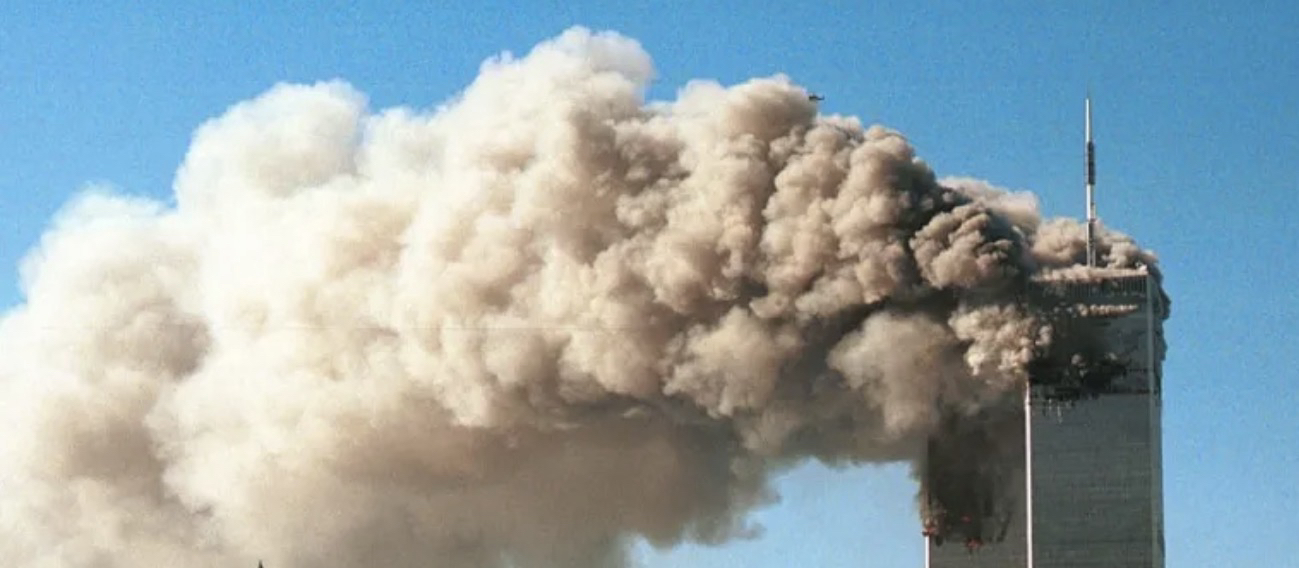
A quarter-century after the attacks, America is finally reaching the point where it can begin to ask not only what happened on September 11, 2001, but what kind of country that day helped create.
Waterbury- Twenty-five years. I had to sit with that number for a minute. It is strange to say it out loud because, in some ways, the years since 2001 never really developed the same identity that previous decades had. We had the ’70s, the ’80s and the ’90s. Then everything seemed to become “2000-something.” We still talk about 2020 as a year rather than simply calling it the beginning of a decade in the way generations before us did.
Maybe that is part of why 25 years feels like it came out of nowhere.
But here we are.
Twenty-five years after September 11, 2001, there are now Americans who have never experienced a September 11 that was not history.
A Pew Research Center survey released this month found that 83% of American adults born before 2001 say they remember exactly where they were or what they were doing when they learned about the attacks. Among adults ages 18 to 24, however, 60% say they first learned about 9/11 through school or classwork. About 10% of American adults today were born after the attacks altogether.
That distinction matters.
Because I belong to the generation in between.
I was old enough to remember 9/11, but young enough to understand it differently than someone who was already an adult with children, a career and a fully formed view of America.
And that gives us a strange opportunity in 2026.
We can look at the America that existed before September 11.
We can look at the America that emerged afterward.
And, for perhaps the first time, we have enough distance to start asking a much bigger question:
What did 9/11 actually create?
The Generation That Inherited Pearl Harbor
I grew up learning about Pearl Harbor.

For my generation, December 7, 1941 was history. We knew the photographs. We knew the stories. We knew that the United States had been attacked and that America went to war.
But we did not live Pearl Harbor.
What we did live were its consequences.
That distinction is important because I think the same thing is beginning to happen with 9/11.
The attack on Pearl Harbor occurred nearly 60 years before September 11, 2001. By the time my generation was growing up in the 1980s and ’90s, Pearl Harbor was already something we inherited rather than something we experienced. Yet the country we lived in had been shaped by it.
The attack itself lasted hours.
Its consequences lasted generations.
The National Archives documents how the shock of Pearl Harbor produced a national wave of fear and suspicion, including the forced removal and incarceration of more than 100,000 people of Japanese ancestry, nearly 70,000 of them American citizens. The effects of those decisions did not disappear when the war ended.
That is what history sometimes gets wrong when we reduce it to dates.
An event can end in a day while the world it creates can last for decades.
That is what makes 25 years after 9/11 so interesting.
We are now beginning to see the same separation between the event and the generation that inherited its consequences.
America Got Caught
September 11 was not simply another terrible day in American history.
It was a checkpoint.
A turning point.
A moment when the country suddenly understood that whatever came next, it was not going to be what came before.
In 2001, America still felt raw to me. It felt unpolished. There was still room to not know things. There was room to find something out later. There was room to simply be okay or not okay without immediately having to explain why.
The world had imperfections, and we seemed more comfortable living inside them.
Then America got caught.
Just as Pearl Harbor had exposed a vulnerability decades earlier, 9/11 exposed another one.
The difference was what came next.
The country did not simply decide to protect itself. It became increasingly determined to know what was happening before it happened.
“See something, say something” became part of the national vocabulary. Investigation became a cultural instinct. Who are you? Where are you? What are you doing? Who is this person?
Security became infrastructure.
The USA PATRIOT Act became law weeks after the attacks, and the Department of Homeland Security was created the following year. The national security system that Americans lived with afterward was fundamentally different from the one that existed before September 11.
And cameras were suddenly everywhere.
And with a few short years more than just government cameras.
Our cameras on our own phones.
We became accustomed to being watched, but we also became accustomed to watching. More importantly, we became accustomed to being ready to capture the next thing that might matter.
That part of the story is especially interesting because 9/11 happened at almost the exact moment America was beginning its enormous technological transformation.
Home broadband was still uncommon in 2001. Smartphones did not yet exist in the form we know them today. Social media had not become part of daily life. By 2025, 78% of Americans had broadband at home and 91% owned a smartphone.
I would not say 9/11 created that technological revolution.
But I do believe 9/11 became one of the major checkpoints through which America entered it.
The country was becoming more connected, more watchful and more immediate all at once.
And eventually, everybody’s timeline started moving together.
We Became a Nation Looking Over Its Shoulder
There is an irony in what happened after September 11.
We wanted to become more aware of the world around us.
In some ways, we did.
But I think we also became more aware of ourselves—our fears, our insecurities, our suspicions and the conclusions we were willing to jump to.
That is one of the more uncomfortable parts of the 9/11 legacy.
The national response was not simply about terrorism. It helped reshape how Americans thought about immigration, outsiders, borders, religion, security and who might represent a threat.
The 9/11 Commission itself drew a historical line between Pearl Harbor and September 11, noting that America had learned from the intelligence failures surrounding Pearl Harbor but still struggled to apply warning information effectively to a new kind of terrorist threat in 2001.
The lesson became more than “never again.”
It became something closer to:
We’re going to get you before you get us.
The country became more aggressive in its willingness to seek out threats before they reached American soil. The language changed, too. It became a “war on terrorism,” followed by a broader political vocabulary in which almost everything could become a “war on” something.
There are benefits to that mentality.
A country that demonstrates overwhelming strength can deter weaker actors. Greater awareness can prevent attacks. Intelligence and security systems can save lives.
But there is another side to it.
When you make your defense larger and more aggressive, you can also create larger ideas of offense in the people on the other side.
That is the trade-off.
And I think the trade-off is one of the central questions of the 25-year story.
Somewhere Along the Way, We Lost Wonder
There is another change that is harder to measure.
I believe we lost wonder.
We lost some of the element of surprise that used to exist in ordinary life.
There was a time when you could live on your street, know your corner store, go to your neighborhood school and exist inside a relatively small local universe. Your life could be important without being connected to everything happening everywhere else.
A kid could come out of nowhere.
A small-town person could become nationally known.
A story could develop before everybody knew the ending.
You could discover something.
Now, so much of life arrives instantly.
Something happens, and within seconds somebody has filmed it, posted it, commented on it, analyzed it and told us what we are supposed to think about it.
The surprise is gone before we have had time to experience the moment.
That transformation cannot be blamed entirely on 9/11. Technology was already moving us in that direction.
But September 11 helped accelerate a national culture built around awareness, information, surveillance and immediacy—and then the technology arrived to give that culture an engine.
Before 9/11, you could grow at your own rate.
You could discover things.
There was more serendipity. More coincidence. More room for life to simply happen.
Today, everything is more structured and controlled.
And, yes, that brings safety.
But it comes with a cost.
For the human spirit, I think the world before 9/11 was better in some ways precisely because it allowed more room for the unknown.
That does not mean we should return to an imaginary past.
It means we should understand what we traded away.
The People Who Don’t Remember
This may be the most important reason to talk about 9/11 differently in 2026.
There are now young Americans who cannot remember it because they were not alive.
There are others who were toddlers.
There are teenagers who know the attacks primarily through documentaries, classrooms, memorials and the stories of parents who were alive that morning.
Reuters recently described this generation as coming of age without personal memories of September 11, experiencing it as history rather than memory.
That is not necessarily a bad thing.
It is simply what time does.
But we should pay attention to it.
Because I remember learning about Pearl Harbor.
I remember hearing about something that felt impossibly far away and wondering what it must have been like.
In the 1980s and ’90s, Pearl Harbor never resonated with me as if it had happened to me.
And yet, I was still living in the consequences of it.
That is the lesson I think we should carry forward.
The event does not have to remain in your memory for its consequences to remain in your life.
That may be where the generations can meet.
The people who remember 9/11 can tell the story.
The people who don’t remember it can ask what came from it.
And both can look at the same country and ask whether the choices made in those first days, months and years after the attacks were worth the world they eventually produced.
Twenty-Five Years Is Not the End of the Story
We have spent 25 years remembering September 11.
Maybe now we can begin studying it.
Not just the attacks but the country.
The enormous amount of service and sacrifice that also came out of those years.
The 9/11 Memorial & Museum’s current 25th-anniversary work, for example, focuses in part on people and communities that transformed grief into service. That is an important reminder that the legacy of 9/11 is not only about destruction. Americans also responded with courage, generosity and a determination to help one another.
So I am not interested in pretending that everything after 9/11 was worse.
It wasn’t.
Some things became safer.
Some things became more connected.
Some people became more engaged.
Some Americans found purpose in service.
And a generation learned that ordinary people can respond to extraordinary circumstances.
But there was a cost, too.
We became more suspicious.
More monitored, immediate, and reactive.
More aware of threats and perhaps less comfortable with uncertainty.
That is why 25 years feels like such a significant point.
It is long enough for a generation to be born, grow up and begin teaching the event to someone else.
It is long enough for an entire national culture to develop around the consequences of a single morning.
But it may not be long enough to know where the story ends.
The 25th anniversary of Pearl Harbor came in 1966, exactly a quarter-century after the attack. President Lyndon B. Johnson’s proclamation that year called on Americans to remember the sacrifices of Pearl Harbor while reaffirming the country’s commitment to freedom and justice.
Twenty-five years after Pearl Harbor, America was still living inside the world Pearl Harbor had helped create.
Twenty-five years after 9/11, so are we.
The difference is that now we have enough distance to begin seeing the shape of it.
And that is what I keep coming back to.
If my generation could look at Pearl Harbor and see only a history lesson, while unknowingly living inside its consequences, then today’s generation could very easily make the same mistake with September 11.
We shouldn’t.
Because the consequences outlive the memory.
And if the first 25 years give us any indication of where this country is heading, then perhaps the most important question is not what happened 25 years ago.
It is what happens over the next 25.
Or the next 50.
Or the next 70.
We will not know the answer today.
But I think we are far enough along the trajectory to start asking where it leads.
Twenty-five years ago, America was attacked and changed.
Twenty-five years later, we are still becoming whatever that change ultimately made us.
And maybe that is the real responsibility of remembering September 11 in 2026:
Not simply to remember the day America lost so much.
But to look honestly at the America that came afterward—and decide what kind of country we want the next generation to inherit.
And today, the people who remember September 11 are becoming the history lesson someone else will learn.
The question is:
What will they learn from us?
And perhaps even more importantly:
What will America become in the next 25, 50 or 70 years because of what happened 25 years ago?
Leave a Reply