
The Waterbury Times Investigates | Consumer Privacy | Nov 12, 2026
UPDATE: Waterbury Marriott Adds Audio and Video Surveillance Notices Following Waterbury Times Questions
The Waterbury Times Investigates | Consumer Privacy | Waterbury, Connecticut
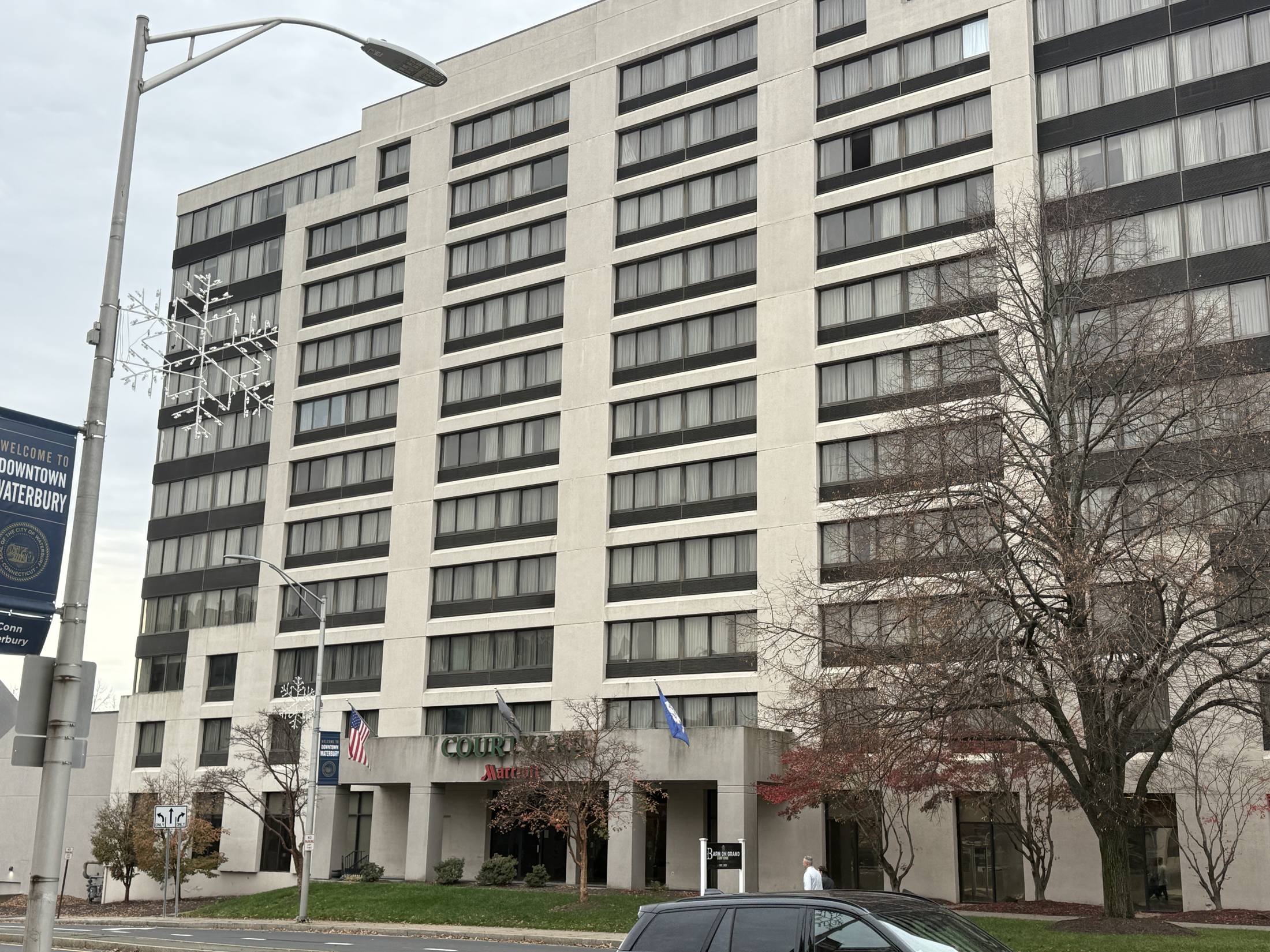
WATERBURY, CT — The Courtyard by Marriott Waterbury Downtown has added signage notifying visitors that audio and video surveillance is in use at the property, a development that follows concerns raised by The Waterbury Times several months ago about the hotel’s recording of conversations inside its lobby.
The newly posted notices mark a development in The Waterbury Times’ ongoing investigation into the property’s surveillance practices and whether hotel guests were adequately informed that their conversations could be recorded.
The investigation began after questions were raised about a security system that captures both audio and video in the hotel’s lobby, including areas where guests routinely interact with front-desk personnel and provide personal and payment information.
When hotel management was initially questioned about the audio-recording practice, management responded:
“We are allowed to do that.”
At the time, The Waterbury Times raised questions about the absence of clearly visible signage informing guests that audio recording was taking place.
Several months later, audio and video surveillance notices have been added to the property.
The addition of those notices is an observable change in the hotel’s notification practices. However, it does not independently answer questions about when audio recording began, how long recordings are retained, who can access them or what safeguards protect guests’ personal information.
What changed?
The newly added notices identify the presence of both audio and video surveillance.
That distinction is important because video monitoring and audio recording raise different privacy considerations.
Guests approaching a hotel front desk may disclose names, addresses, reservation information, payment details and other personal information. An audio-enabled surveillance system may capture conversations that extend beyond the immediate transaction.
The Waterbury Times has not independently established whether the new notices were added as a direct result of the publication’s questions. Their appearance follows the concerns raised by the newsroom several months earlier.
The legal questions remain
Connecticut General Statutes §§ 53a-187 and 53a-189 address mechanical overhearing and unlawful eavesdropping.
Connecticut generally follows a one-party-consent standard for in-person conversations. Whether a particular recording is lawful depends on the circumstances, including who is recording, whether a participant has consented and the nature of the conversation.
The addition of signage does not automatically establish that every recording is lawful. Nor does the earlier absence of signage, by itself, establish that the hotel violated Connecticut law.
The Waterbury Times continues to seek clarification about the legal basis for the hotel’s recording practices and the circumstances under which conversations are captured.
Questions about guest information remain
The investigation also examined the potential capture of payment information.
The Payment Card Industry Security Standards Council prohibits retaining card verification codes in digital audio recordings after payment authorization.
The presence of audio surveillance near a front desk makes it important to understand what safeguards are in place to prevent sensitive payment information from being captured and retained.
The Waterbury Times is seeking answers regarding recording retention, access controls, corporate surveillance policies and protections for guest information.
Have you stayed at the Waterbury Marriott?
The Waterbury Times continues to invite former and current guests, event attendees and other visitors to share their experiences.
Were you aware that conversations inside the hotel could be recorded?
Did you notice surveillance signage during an earlier visit?
Have you raised privacy concerns with hotel management?
The newsroom is interested in firsthand accounts from people who have stayed at or conducted business inside the property.
Readers can contact The Waterbury Times confidentially. Do not submit credit card numbers, identification numbers or other sensitive personal information.
An ongoing investigation
The addition of audio and video surveillance notices represents a development worth documenting.
The Waterbury Times raised questions about guest notification several months ago. The property now displays notices identifying both forms of surveillance.
What remains unanswered is whether guests previously understood that their conversations were being recorded, what the hotel does with those recordings and what legal and security safeguards govern the practice.
Transparency matters. Knowing that a camera is watching is not necessarily the same as knowing that a microphone is listening.
The Waterbury Times will continue pursuing answers from hotel management and Marriott International.
WATERBURY, CT — When you check into a hotel, you expect security cameras to be watching the lobby. What you may not expect is that those cameras are also listening.
At the Courtyard by Marriott Waterbury Downtown, questions are being raised about a security surveillance system that captures both video and audio inside the hotel’s lobby, including an area where guests routinely interact with front-desk personnel and provide personal and payment information.
The Waterbury Times has confirmed that the property’s security system captures audio. When hotel management was questioned about the practice, management responded:
“We are allowed to do that.”
But what does that mean for hotel guests? What law permits the practice? Are visitors informed that their conversations are being captured? And what happens to the information recorded when someone provides a credit card number, discusses a reservation or shares other personal details?
The Waterbury Times examined Connecticut’s recording laws and payment-security standards to better understand the questions surrounding the hotel’s surveillance practices.
During the visit that prompted this investigation, The Waterbury Times did not observe clearly visible signage notifying guests that conversations in the lobby were being audio-recorded.
The absence of visible notice, combined with management’s response, raises questions that deserve answers from both the hotel and its corporate brand.
Video surveillance is one thing. Audio recording is another.
Security cameras are a familiar part of modern hotel operations. They are commonly used to monitor entrances, hallways, parking areas and public spaces.
Audio recording introduces another dimension.
A camera captures what happens in front of its lens. An audio-enabled surveillance system can also capture conversations taking place within its microphone range.
At a hotel front desk, those conversations can involve considerably more than a guest’s name.
Guests may communicate:
- Full names and residential addresses.
- Reservation and travel information.
- Credit card numbers and payment details.
- Identification information.
- Personal circumstances involving their stay.
- Conversations with family members, colleagues or other guests.
The concern is not simply that a camera exists. It is whether people understand that their conversations are being captured, who can access those recordings and how long the information is retained.
The Waterbury Times has not independently established the hotel’s audio retention period, access controls or whether every conversation within the microphone range is stored.
Those are among the questions management needs to answer.
Is recording conversations legal in Connecticut?
Connecticut has specific laws addressing the recording and overhearing of conversations.
Under Connecticut General Statutes § 53a-187, mechanical overhearing of a conversation is defined as the intentional overhearing or recording of a conversation or discussion, without the consent of at least one party, by a person who is not present, using an instrument or device.
Connecticut General Statutes § 53a-189 makes unlawful eavesdropping a Class D felony.
This is an important distinction: Connecticut generally follows a one-party-consent standard for in-person conversations. The law does not automatically require every person participating in a conversation to consent to its recording.
For example, a hotel employee participating in a conversation with a guest may be a consenting party.
However, that does not automatically settle every possible recording scenario inside a hotel lobby.
What happens when a surveillance system captures conversations between guests who are not speaking with hotel employees? What happens when people are having private conversations within microphone range but are unaware that a system is recording?
The circumstances of the recording, who is responsible for it, whether a participant has consented and whether the recording is legally authorized all matter.
The absence of a sign alone does not establish a criminal violation. But management’s assertion that the practice is permitted deserves a more specific explanation.
The Waterbury Times wants to know what legal authority the hotel relies upon when recording conversations in its public lobby.
What about credit card information?
There is another issue that makes the investigation particularly important to consumers.
Hotel guests routinely provide payment information during check-in. Depending on the transaction, they may provide card details, discuss payment arrangements or communicate information verbally to front-desk personnel.
The Payment Card Industry Security Standards Council (PCI SSC), which establishes payment-card security standards, specifically addresses audio recordings containing sensitive authentication information.
Under PCI DSS Requirement 3.3.1, card verification codes — commonly known as CVV, CVC or CID numbers — cannot be retained in digital audio recordings after the transaction has been authorized.
The council also advises businesses to make every effort to prevent sensitive authentication information from being recorded in the first place.
This does not mean that every audio recording containing a credit card number is automatically prohibited. It does mean that specific payment information is subject to strict security and retention requirements.
If a hotel’s surveillance system captures conversations at the front desk, what protections are in place to prevent sensitive payment information from being retained?
Does the hotel have technology that suppresses or removes sensitive information from recordings?
Who is responsible for ensuring compliance with payment-security requirements?
These are not hypothetical concerns when a business is capturing audio in an area where financial transactions routinely take place.
What does Marriott say?
The Waterbury Times is seeking a formal explanation from Courtyard by Marriott Waterbury Downtown and Marriott International.
When hotel management was asked about the audio-recording practice, management’s response was:
“We are allowed to do that.”
The statement raises an obvious follow-up question: Allowed under what specific authority, and under what conditions?
The Waterbury Times wants to know whether the practice is governed by a Marriott corporate policy, a property-level security policy or another legal or operational standard.
The publication is seeking answers to the following questions:
- Does the property continuously record audio in its lobby and front-desk areas?
- Are all conversations within the surveillance system’s microphone range captured?
- Are audio recordings stored, or is audio monitored in real time without retention?
- How long are recordings retained?
- Who has access to the recordings, including hotel management, corporate personnel and third-party security providers?
- Are guests notified before entering an area where conversations are audio-recorded?
- Does Marriott International have a companywide policy governing audio surveillance at its hotels?
- What specific Connecticut law or legal authority does management rely upon when stating that the practice is permitted?
- What safeguards prevent credit card numbers, card verification codes and other sensitive personal information from being retained in audio recordings?
- Has the property’s surveillance system and recording policy been reviewed by legal counsel for compliance with Connecticut law and applicable payment-security standards?
The Waterbury Times is providing hotel management and Marriott International an opportunity to address these questions and explain the property’s practices.
Have you stayed at the Waterbury Marriott?
The investigation also raises a question for the people who have actually walked through the hotel’s doors.
Have you stayed at the Courtyard by Marriott Waterbury Downtown?
Did you know that conversations in the lobby were being captured by an audio-recording system?
Did you see any signs notifying you that your conversations could be recorded?
Were you ever uncomfortable discussing personal information, providing payment details or conducting business at the front desk?
Have you raised concerns about the hotel’s surveillance practices with management?
The Waterbury Times wants to hear from former guests, current guests, event attendees and anyone who has conducted business inside the property.
Firsthand accounts can help establish what guests were told, what they observed and whether concerns about the practice have previously been brought to management.
Readers can contact The Waterbury Times confidentially through its newsroom.
Please do not submit credit card numbers, identification numbers or other sensitive personal information.
The question is about more than cameras
Hotels have legitimate security responsibilities. Guests and employees deserve safe environments, and businesses have a right to take reasonable steps to protect their property.
But security and transparency are not mutually exclusive.
When a person walks into a hotel lobby, approaches a front desk and provides information necessary to complete a reservation or payment, that person should have a reasonable opportunity to understand what information is being collected.
A security system that captures both images and conversations raises questions that ordinary video surveillance does not.
The Waterbury Times is not declaring that the hotel’s recording practices violate Connecticut law. That determination requires a review of the actual recording configuration, consent arrangements, purpose and retention practices.
But management’s statement that the hotel is allowed to record audio does not answer all of those questions.
If your conversations are being recorded, shouldn’t you know?
The Waterbury Times will continue seeking answers from Marriott and will report additional findings as they become available.
Primary references
Source
Relevance
Definition of mechanical overhearing
Eavesdropping offense
Employee electronic monitoring
Audio recordings and card verification codes
Marriott official property listing
Property identification and address
Leave a Reply