
The Waterbury Times|Local Government|Nov 20, 2026
As the Board approaches its final meeting of 2026, a year of major spending decisions, public disagreements, infrastructure concerns and questions about accountability deserves a closer look.

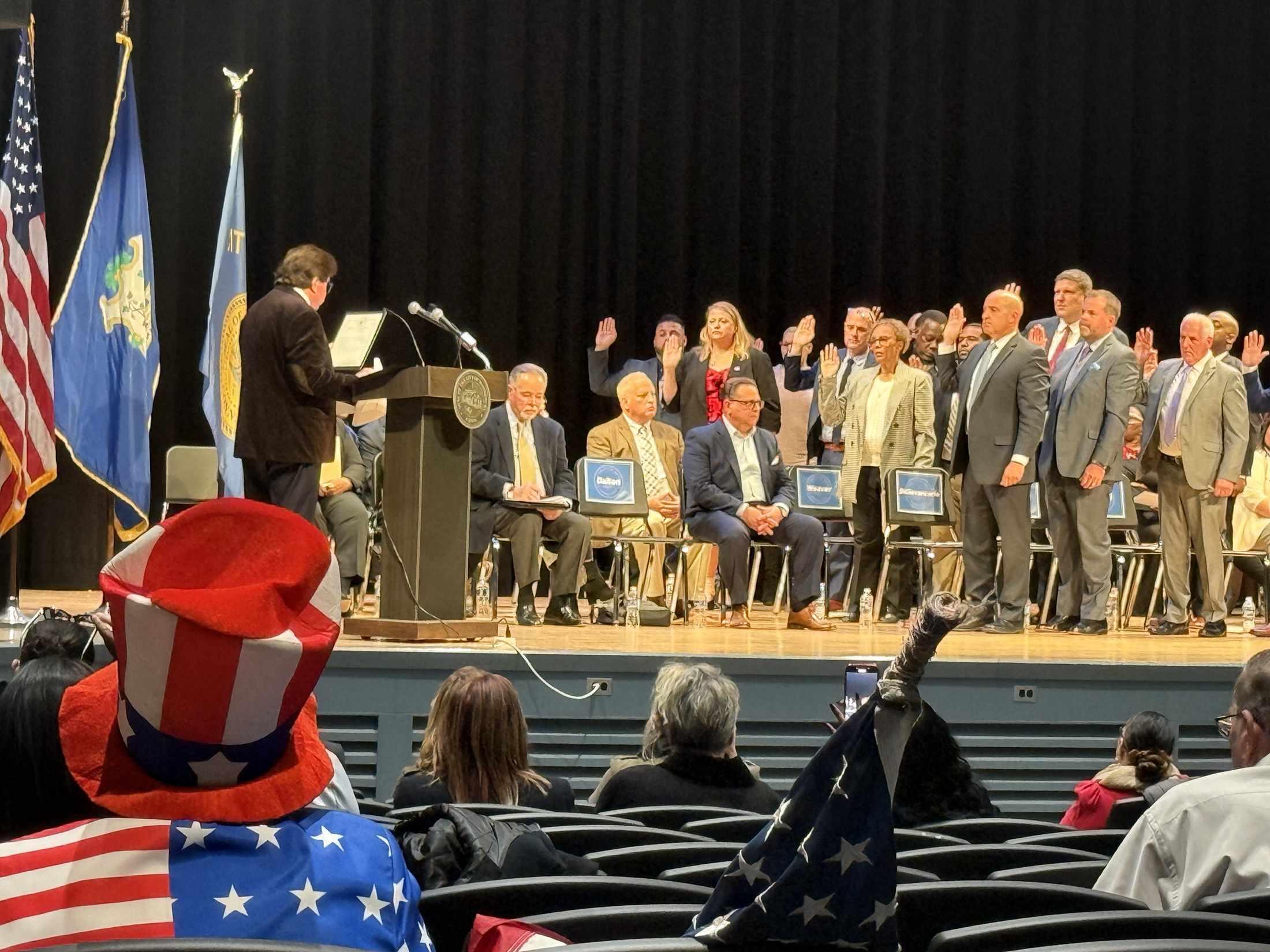
WATERBURY — One year ago, Waterbury’s newly elected Board of Aldermen took office with promises of transparency, fiscal responsibility, neighborhood representation and a renewed focus on the responsibilities of local government.
The December 2025 inauguration brought new faces, returning members, changes in political alliances and an immediate reminder that governing is different from campaigning.
Now, as the Board prepares for its final meeting of the calendar year in December, The Waterbury Times is looking back at the first year of the 2025–2027 term.
There were decisions that benefited residents, votes that raised serious questions, and moments when political disagreements became bigger than the issues before the Board.
The record is mixed. And for residents, the important question is not which political party won the argument. It is whether the decisions made inside City Hall are producing results outside of it.
THE GOOD: Fiscal Oversight and a Willingness to Challenge City Hall
One of the clearest developments during the Board’s first year has been its willingness to question the administration’s financial proposals.
That was particularly evident during the FY2027 budget process.
The Board approved the city’s $457.5 million budget, which included a reduction in the real estate and personal property mill rate from 44.98 to 43.34. That reduction should not automatically be interpreted as a tax decrease for every property owner, particularly as Waterbury completed the final phase of its four-year property revaluation.
The Board also modified the administration’s proposed water-rate increases.
The water usage rate increased from $2.65 to $3.50 per hundred cubic feet. However, the Board rejected the proposed increase in the basic quarterly residential service charge from $12 to $24, keeping that charge at $12 for typical residential meters. Larger commercial meters saw their quarterly basic charge increase to $120.
It was a compromise between the Water Department’s need for additional revenue and residents’ concerns about higher household costs.
The Board also demonstrated that major financial proposals would not necessarily receive automatic approval.
In October, aldermen spent hours debating a proposal to borrow $5 million for the Waterbury Land Bank, which would have been combined with a matching $5 million state grant to create a $10 million funding package.
The proposal failed to secure the required supermajority.
Regardless of where residents stand on the Land Bank itself, the vote demonstrated something important: the administration could not simply assume that a major borrowing request would pass without extensive questioning.
That is part of the Board’s job.
Aldermen are not supposed to serve as a rubber stamp for the mayor. They are elected to examine spending, challenge proposals, represent their districts and make decisions in the public interest.
The Board also approved a $100 million capital appropriation and bond for the proposed Waterbury Preschool Center in June. A proposed amendment that would have tied the funding to guaranteed state reimbursement failed, but the underlying bond passed.
These decisions illustrate the balancing act facing the Board: supporting long-term investments while examining the financial obligations being placed on taxpayers.
THE BAD: A Water System Crisis and Questions About Accountability
The year was also marked by serious questions about Waterbury’s water infrastructure and the administration of the Water Department.
In April, Water Superintendent Bradley Malay resigned following allegations of misconduct and a police investigation. The resignation came amid concerns about water system problems, including a fire on Bennett Avenue where firefighters encountered inadequate hydrant pressure.
The situation prompted aldermen to demand answers.
Republican members of the Board publicly criticized the administration for what they described as a lack of communication about the superintendent’s resignation, the investigation and the condition of the city’s water system.
A special meeting was held April 30.
For residents, this was bigger than a disagreement between political factions. Water pressure, functioning hydrants and reliable infrastructure are public safety matters.
The Board has an oversight responsibility, and residents have a legitimate interest in knowing whether the city has identified the problems, corrected deficiencies and established procedures to prevent similar incidents.
The water crisis also put the city’s financial decisions into perspective. Water infrastructure requires investment, but residents deserve to know how that money is being spent, what improvements are being made and whether the system is becoming more reliable.
A budget allocation is not the same thing as a completed infrastructure improvement.
The Board’s responsibility does not end when a contract is approved. Oversight means following the work through to completion.
THE UGLY: The Mad River PCB Vote
Perhaps the most contentious moment of the Board’s first year came in May, when aldermen considered an amendment to a construction contract involving environmental remediation at 359 Mill Street and 777 South Main Street.
During remediation work near the Mad River, contractors discovered a previously unidentified underground storage tank containing PCB-contaminated material. The city reported surrounding soil contamination of approximately 2,200 parts per million.
The Connecticut Department of Energy and Environmental Protection became involved, and the city warned that failure to address the situation could expose it to significant enforcement penalties.
On May 11, nine aldermen voted in favor of the contract amendment. Six voted against it.
The amendment failed because 11 affirmative votes were required.
The failed vote triggered a public dispute between Mayor Paul Pernerewski and members of the Board’s minority caucus. The mayor criticized the vote, arguing that political disagreements had interfered with an urgent environmental cleanup.
The minority caucus disputed the administration’s characterization and argued that procedural concerns surrounding the Board’s rules and the city’s process were central to the disagreement.
The issue was brought back before the Board at a special meeting on May 18, when the amendment passed unanimously among those present.
The cleanup moved forward, but the controversy left a larger question hanging over City Hall: how did an environmental remediation issue become entangled in a political and procedural fight?
Residents should expect their elected officials to disagree. They should expect questions, debate and scrutiny. But when public health and environmental safety are involved, the city needs a process that allows legitimate oversight without unnecessary delays.
This episode was not a victory for either political party. It was a test of whether the Board and administration could separate their disagreements from the responsibility to protect residents.
DEVELOPMENT, TAX ABATEMENTS AND THE COST OF GROWTH
Another important issue during the year was how Waterbury approaches development and the use of tax incentives.
In March, the Board approved a 10-year tax abatement for a proposed 23-unit market-rate townhouse development on Boyden Street.
The vote was 10–4.
Supporters pointed to the need for additional housing. Opponents questioned whether a decade-long tax incentive was appropriate for a project that did not include affordable housing.
This is the kind of decision that deserves more than a simple yes-or-no debate.
Waterbury needs development. It needs investment, additional housing and a stronger tax base. But residents also deserve to understand what the city is receiving in exchange for the incentives it offers developers.
How much revenue will the city collect? What public benefits are included? Are affordable housing opportunities part of the agreement? How does the project fit into the neighborhood?
Development should be measured not only by the number of units constructed or the value of a private investment, but also by the long-term benefit to the city and its residents.
The Board will continue to face these questions as Waterbury pursues redevelopment.
THE QUESTION OF CONSISTENCY
One of the most interesting contrasts in the Board’s first year has been the difference between how some major spending proposals are handled.
In March, a $5 million road-paving bond passed unanimously after remaining on the consent calendar without being pulled for individual debate.
In October, the proposed $5 million Land Bank borrowing received hours of discussion and ultimately failed to secure the necessary votes.
There are legitimate differences between the projects, their financing structures and their intended purposes. They should not automatically be treated as equivalent proposals.
But the contrast raises a fair question: What determines which major expenditures receive extensive public scrutiny and which move through the approval process with little discussion?
Residents should not have to depend on the political alignment of an agenda item to determine whether it receives meaningful examination.
Fiscal responsibility is not simply voting against borrowing. It is understanding what the city is borrowing for, what it will cost, what residents will receive and whether the investment makes sense.
The same standard should apply regardless of who introduces the proposal.
ONE YEAR LATER: WHAT HAS ACTUALLY CHANGED?
In March, approximately 120 days into the new term, The Waterbury Times examined the Board’s early record.
At that point, the focus was on establishing oversight, questioning consulting agreements, examining departmental operations and addressing issues such as snow removal and emergency communication.
The Board has since faced much larger tests.
It has debated a multimillion-dollar budget, adjusted water charges, approved major capital borrowing, questioned development incentives, confronted an environmental remediation dispute and challenged the administration over the Water Department.
There has been no shortage of activity.
But activity and accomplishment are not the same thing.
The public should be able to identify what changed because of the Board’s work. Which neighborhoods received improvements? Which infrastructure problems were corrected? Which policies were adopted? Which financial decisions saved residents money or created measurable value?
And where the Board has failed to reach agreement, residents deserve to understand why.
WHAT RESIDENTS SHOULD EXPECT NEXT
The Board’s final meeting of 2026 offers an opportunity to close the first year with more than another round of motions and votes.
The next year should bring a stronger emphasis on measurable outcomes, public communication and consistent oversight.
Residents should expect:
- Clear explanations of major spending and borrowing proposals.
- Follow-up reporting on approved infrastructure projects.
- Accountability and public updates regarding the city’s water system.
- Greater transparency surrounding development incentives and tax abatements.
- Continued attention to neighborhood concerns, public safety and city services.
- Consistent scrutiny of the administration, regardless of political affiliation.
The Board of Aldermen is one of the most important institutions in Waterbury government. It approves budgets, authorizes borrowing, considers contracts and ordinances, and provides a legislative check on the administration.
Its members represent individual districts, but their decisions affect the entire city.
The first year has shown that this Board is capable of challenging City Hall. It has also shown how quickly disagreements can become distractions from the issues residents expect their elected officials to address.
The good is that the Board has demonstrated a willingness to question spending and exercise independent judgment.
The bad is that serious infrastructure and accountability questions remain.
The ugly is that political and procedural disputes have, at times, overshadowed matters that demanded cooperation.
One year into the term, the verdict is not final. The Board still has another year to demonstrate what it can accomplish.
The question for every alderman is simple: What can residents point to in their own neighborhoods and say, “That is better because of the work this Board did”?
That is the measure of local government. Not the speeches. Not the party affiliations. Not the arguments at the dais.
The results.
The Waterbury Times will continue following the Board of Aldermen, its votes and the decisions that affect Waterbury residents as the 2025–2027 term continues.
Reporting notes and sources
The article draws on The Waterbury Times’ own first-120-days review and its BOA coverage, along with published reporting and city records. The key supporting records include:
- The Board’s early-term actions and oversight questions: 120 Days Later: What Has the Waterbury Board of Aldermen Done So Far?
- The FY2027 budget and water-rate changes: Waterbury’s approved budget will lower mill rate and Mayor’s Proposed Budget presentation.
- The Boyden Street tax abatement: Waterbury aldermen OK 10-year tax abatement.
- The water superintendent controversy: Aldermen demand answers after water superintendent resigns.
- The PCB remediation dispute: The Waterbury Times: Mayor blasts failed PCB cleanup vote and City statement on PCB remediation.
- The Land Bank borrowing debate: Republican-American: Aldermen praised for fiscal responsibility.
- The $5 million road-paving bond: The Waterbury Times: Road paving bond passes without debate.
Leave a Reply