
The Waterbury Times| Op/Ed| Published April 22, 2026
Updated May 4, 2026 8:39PM
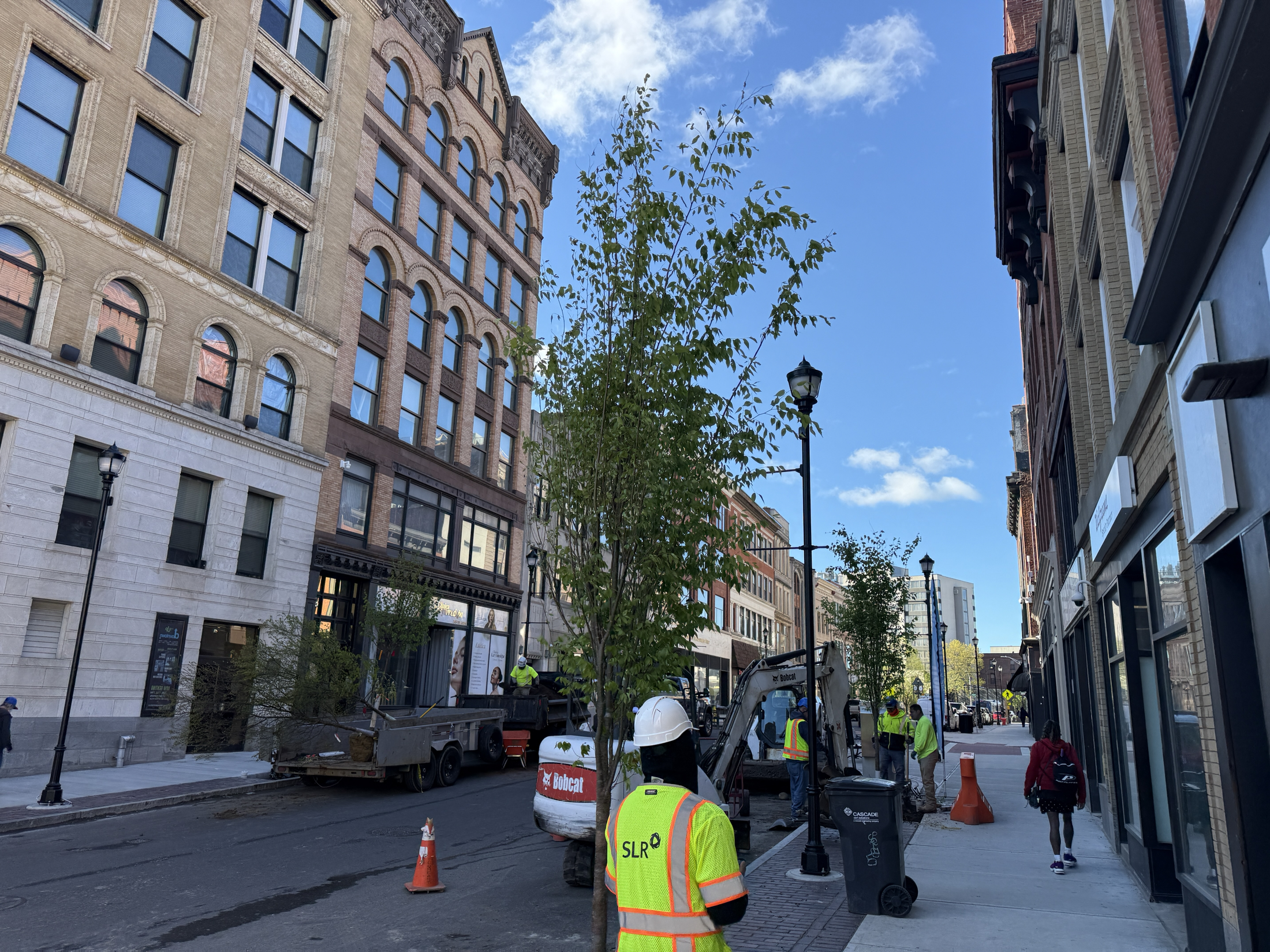
In honor of Earth Day, We decided to remember taking a walk down a sidewalk in Waterbury on a 90-degree afternoon and how hot it felt, step by step, and the stark difference a single row of trees would have mad between a block that is livable and one that simply endures the heat. The following Op/Ed piece goes further into the matter.

The following piece is written by Josh Smith, a lifelong Connecticut resident, a student at the University of Connecticut, and an employee of the UConn Office of Sustainability. He is passionate about advancing environmental protection and equitable urban planning in his home state.
This past summer, walking through downtown Waterbury on 90-plus degree days, I found myself asking that question over and over. The difference between shaded and unshaded blocks becomes impossible to ignore when you feel it yourself.
Picture this: it’s mid-July. You’re standing on a downtown sidewalk, heat radiating off the pavement. According to local data, Waterbury has just 38.10% urban tree coverage, and only 27.91% of its land area is potentially plantable. Most of those trees are concentrated on the outskirts of the city. Central neighborhoods — where more people live, work, and walk — have far fewer trees and significantly higher surface temperatures.

The result is striking. On the hottest summer days, pavement temperatures downtown can average nearly 20 degrees hotter than in other parts of the city. The coolest neighborhoods in Waterbury have almost twice the tree canopy of the hottest ones.
Trees cool environments, but their value goes far beyond shade. Numerous studies show that trees improve air quality, boost property values, support community gathering spaces, and improve both physical and mental health. In downtown Waterbury, however, the absence of trees makes these benefits feel noticeably out of reach.
For many residents, this heat disparity is not just uncomfortable — it feels unsafe. Waiting at a bus stop without shade, walking home from work under direct sun, or running errands in peak afternoon heat can quickly become physically dangerous. Building awnings provide only small, localized relief along sidewalks that otherwise bake in the sun.
Prolonged exposure to extreme heat can lead to dehydration, heat exhaustion, heat cramps, and even heatstroke. What should be an ordinary walk down the street or a wait for public transportation becomes a gamble with heat-related illness.
There is also a financial cost. Hotter neighborhoods require more air conditioning, driving up electricity bills for residents and cooling costs for businesses. Heat-related illnesses can lead to unexpected medical expenses that disproportionately affect vulnerable residents. Meanwhile, infrastructure suffers. Roads, sidewalks, and buildings crack and degrade faster under intense heat and constant sun exposure, increasing long-term maintenance costs for the city.

This pattern is not random. Areas with higher poverty rates tend to have less tree canopy coverage. That means low-income residents often face more heat, less shade, and heavier economic burdens as a result.
The benefits of greater tree cover extend deeply into how people live their daily lives. Shade encourages walking instead of driving short distances. Trees filter pollutants, improving air quality. Shaded sidewalks and green spaces create places where neighbors gather and communities form. These changes promote comfort, safety, and stronger social ties.
Efforts are already underway to identify where new trees can thrive and to guide municipalities in planting them. In downtown especially, expanding tree cover could raise property values, create calmer public spaces, and even contribute to reductions in violent and property crime. Research consistently links greener environments with improved community well-being.
Some may argue that planting trees is too costly or too slow to address rising temperatures. In reality, it is one of the most cost-effective long-term strategies cities can implement to combat urban heat. The return on investment includes improved public health, lower infrastructure costs, reduced energy use, and a higher quality of life for residents.
This is about more than landscaping. It is about equity, safety, and livability.
The next time you walk through downtown Waterbury on a hot summer day, pay attention to how different shaded and unshaded blocks feel. That difference is not accidental. It is a clear demonstration of how urgently stronger tree coverage is needed.
As Waterbury continues to develop, prioritizing tree canopy is an investment in a healthier, cooler, and more livable future for all residents.
About Uconn Office of Sustainability
The UConn Office of Sustainability coordinates university-wide efforts to reduce environmental impact, improve resource efficiency, and engage students and staff in hands-on climate and conservation work across UConn’s campuses.
Key focus areas include:
- Climate & Energy: Advancing greenhouse-gas reduction strategies, energy efficiency, and renewable energy projects that support the university’s long-term climate goals.
- Waste Reduction & Recycling: Expanding recycling, composting, and waste-diversion programs while educating the campus community on responsible consumption.
- Sustainable Landscapes & Stormwater: Supporting green infrastructure such as rain gardens, native plantings, and tree stewardship that improve biodiversity and manage runoff.
- Student Engagement & Internships: Providing applied learning opportunities where students work on real sustainability projects, data collection, and community education.
- Community Partnerships: Collaborating with Connecticut municipalities, nonprofits, and agencies to share research, tools, and best practices that can be applied beyond campus.
Through research, operations, and student involvement, the office serves as a bridge between academic knowledge and practical environmental solutions that can be replicated in communities across Connecticut.
Read More Opinions from Our Readers-Opinion & Editorials | Waterbury Times – Local Perspectives and Analysis
Leave a Reply