
Waterbury Times Investigative Desk|July 5, 2026
Waterbury- A series of recent shootings tied to nightlife venues across Waterbury — including a fatal Fourth of July weekend incident at LA 42 Night Club — has renewed concern about whether the city is seeing a recurring pattern of violence linked to bars, clubs, and late-night gatherings.
While each incident is being investigated separately by police, a broader question is emerging in the community:
Are these isolated tragedies — or a predictable pattern tied to nightlife conditions in the city?
18-Year-Old Waterbury Woman Dies Following LA 42 Night Club Shooting
The Incidents Raising Concern
Recent and recurring events cited by residents and officials include:
- A fatal shooting outside LA 42 Night Club on East Main Street during Fourth of July weekend, leaving a 22-year-old man dead and an 18-year-old woman critically injured
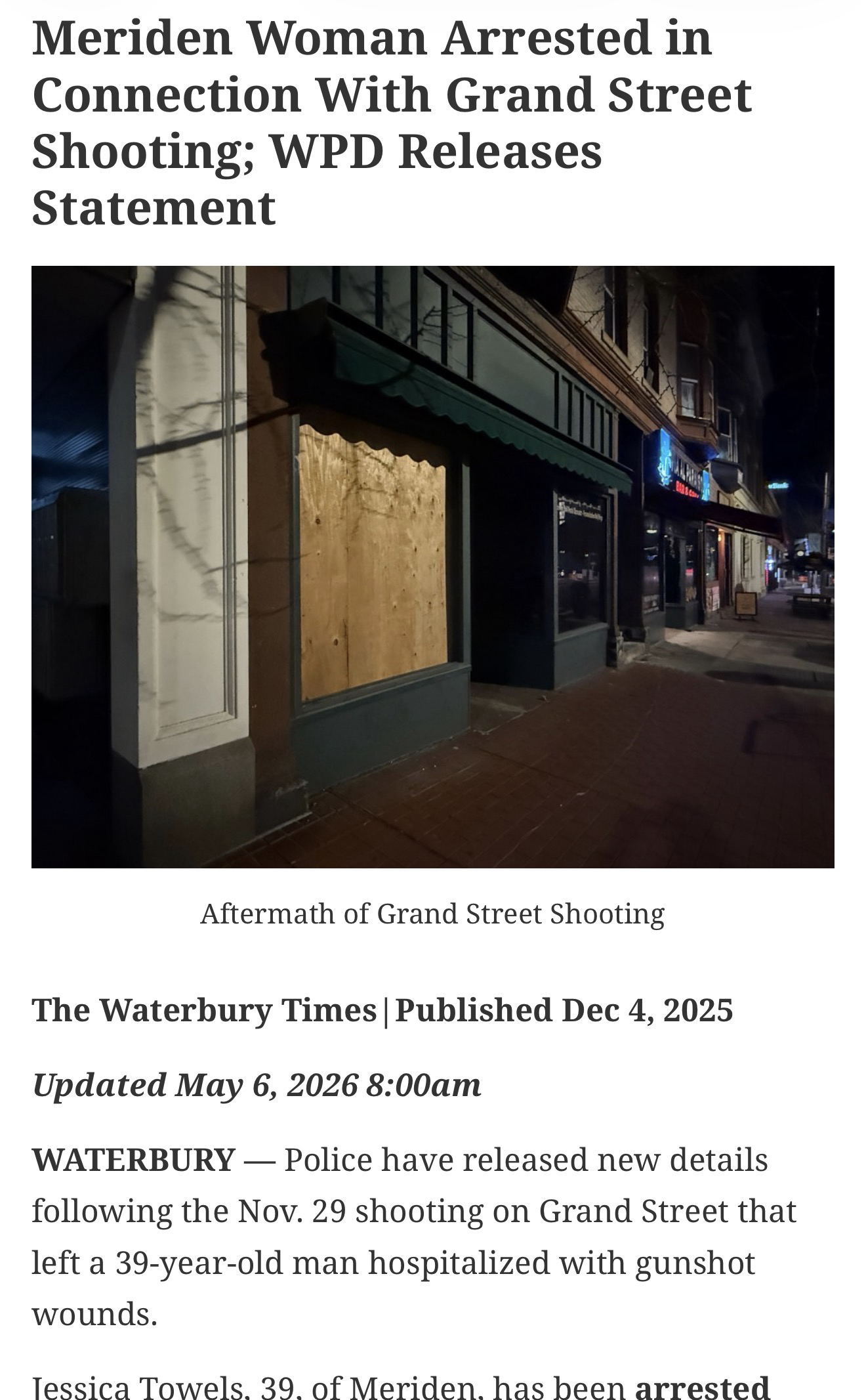
- A shooting tied to Grand Street nightlife activity, where evidence of gunfire was found in the roadway near a bar district in May 2026 and an individual was shot at same location Nov 2025
- Prior bar-adjacent shootings and assaults in multiple Waterbury nightlife corridors, including earlier incidents on Grand Street and surrounding downtown blocks
Taken together, these incidents form what some residents describe as a “pattern of violence near nightlife venues.”
What Police Data Typically Shows
Law enforcement data in cities similar to Waterbury consistently shows:
- The highest concentration of shootings occurs late at night (roughly midnight to 3 a.m.)
- Incidents cluster around:
- Bars and clubs
- Nearby parking lots
- Nearby intersections where crowds disperse
- Violence is often triggered after disputes escalate outside the venue, not inside
This means the “bar connection” is often about proximity and timing, not necessarily that venues are the direct cause.
Why Holidays and Weekends Keep Appearing
Events like:
- Fourth of July weekend
- Holiday gatherings
- Special nightlife events
- Seasonal bar crowd surges
…create conditions that increase risk factors:
- Higher alcohol consumption
- Larger crowds
- More out-of-town visitors
- Overlapping social groups
- Increased presence of firearms in disputes that escalate quickly
What looks like a holiday-driven pattern is often a predictable surge in nightlife density.
The “Hot Zone” Theory: It’s Not Just the Venue
One key issue investigators look at is whether violence is tied to:
- A specific bar or club
- OR a small geographic “spill zone” around nightlife corridors
In many cities, including Waterbury, violence tends to concentrate within:
- 1–3 block radiuses of nightlife clusters
- Major street corridors with multiple venues
- Areas with limited post-closing crowd control
This means a single “problem venue” may actually be part of a larger nightlife ecosystem problem.
What Actually Works to Reduce These Incidents
Cities that have successfully reduced bar-adjacent shootings typically use a combination of:
1. Targeted late-night enforcement
- Focused patrols during closing hours
- Parking lot and street dispersal monitoring
2. Liquor license accountability
- Conditional licensing tied to incident history
- Security staffing requirements
- Temporary suspensions for repeated incidents
3. Crowd dispersal management
- Rideshare staging zones away from entrances
- Private security coordination with police
- Lighting and surveillance improvements
4. Data-driven hotspot policing
- Tracking repeated incidents by block, time, and venue
- Identifying “repeat clustering zones”
The Central Question for Waterbury
The data suggests something important but often misunderstood:
These incidents are not random — but they are also not confined to single locations or single holidays.
Instead, they reflect a repeatable environment of risk:
- late-night hours
- alcohol-fueled crowd density
- limited dispersal control
- and rapid escalation of interpersonal conflict
What Comes Next
As Waterbury continues to investigate recent shootings, the city faces a broader policy question:
- Should enforcement focus on individual venues?
- Or on entire nightlife corridors and closing-hour conditions?
Because if the pattern holds, the solution may not be about where incidents happen — but when and how people are leaving them.
Leave a Reply