
World War I — The War That Changed the World
The Waterbury Times|2026 Memorial Day| Published May 21, 2026
Waterbury- When the United States entered World War I in 1917, many Americans believed the war would be short.
It was not.
What became known as “The Great War” introduced the world to a level of industrialized warfare humanity had never seen before. Trenches stretched for miles across Europe. Machine guns, poison gas, artillery bombardments, and tanks transformed combat into something far deadlier than previous generations could have imagined.
Young American soldiers crossed the Atlantic into a war already soaked in years of bloodshed.
For many, it was their first time leaving home.
For thousands, it would be their last.
More than 116,000 Americans died during World War I, while countless others returned carrying physical and emotional scars that would follow them for the rest of their lives.
The war also marked America’s emergence as a growing global power, signaling that conflicts overseas could reshape life back home in profound ways.
The Waterbury Connection

By the time World War I began, Waterbury had fully transformed into an industrial powerhouse known across the nation as “The Brass City.”
Factories operated around the clock producing brass products, manufacturing materials, and industrial goods critical to the American war effort. The city’s booming industrial base connected Waterbury directly to the frontlines overseas.
As local factories expanded production, young men from Waterbury enlisted and deployed to Europe, leaving behind busy factory floors, crowded immigrant neighborhoods, churches, and growing families.
For many residents, the war represented both patriotism and uncertainty.
Families gathered around newspapers waiting for updates from Europe.
Church bells rang for victory celebrations and mourning services alike.
Service flags appeared in windows across neighborhoods throughout the city.
The war also accelerated social and economic change in Waterbury.
Immigrant communities from across Europe — many already deeply rooted in the city — suddenly found themselves emotionally connected to a conflict unfolding in the homelands they once left behind.
At home, factory workers, women, and local businesses all became part of the broader wartime effort, helping sustain production as the nation mobilized for war on an unprecedented scale.
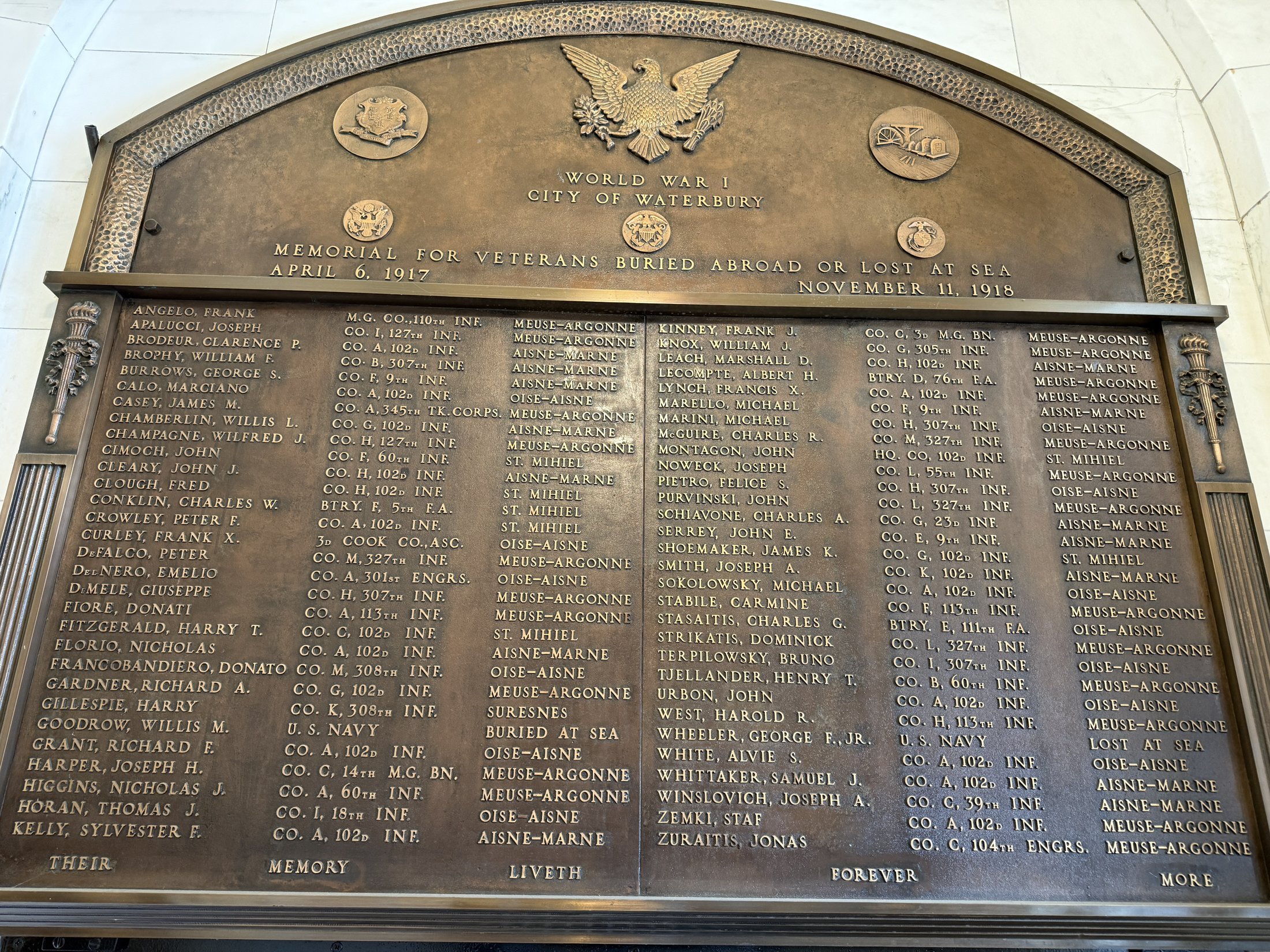
And when the war finally ended in 1918, communities like Waterbury were forever changed by the names that never came home.
As America entered the modern age, World War I left behind a painful reminder:
Technology may evolve.
Weapons may change.
But the cost of war remains deeply human.
Tomorrow, the Waterbury Times continues its countdown to Memorial Day with a look at World War II — the war that defined an entire generation and reshaped the modern world.
More Memorial Day Stories
Leave a Reply