
The Waterbury Times|Published Oct 21, 2026
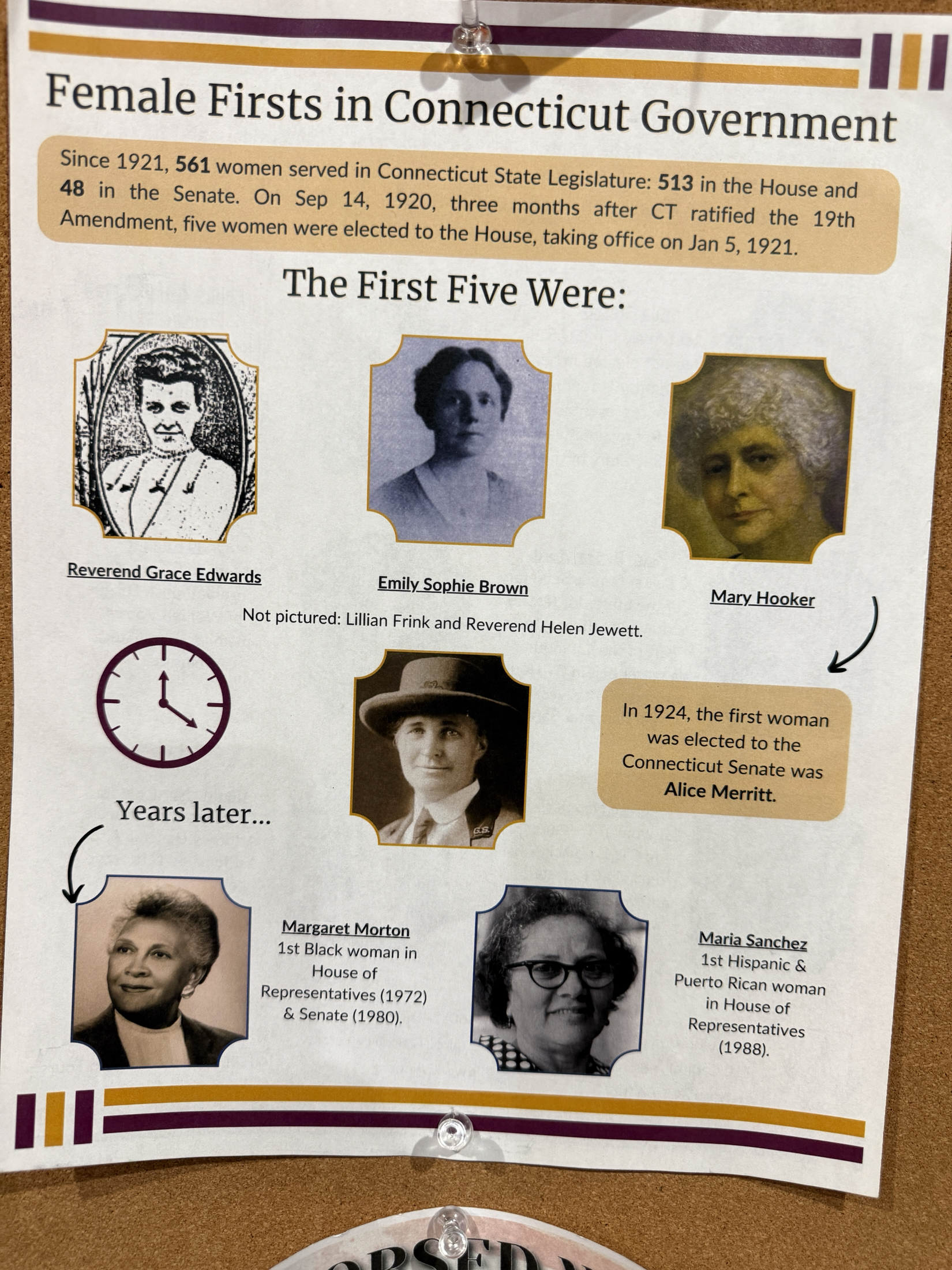
Waterbury- A century of women in state government reflects changing political representation across Connecticut.Connecticut women have served in the state legislature for more than a century, beginning with five women elected in 1920 who took office the following January. Their arrival followed Connecticut’s ratification of the 19th Amendment, which prohibited denying the right to vote on the basis of sex.
According to figures provided in the historical summary, 561 women have served in the Connecticut General Assembly: 513 in the House of Representatives and 48 in the Senate. That record stretches from the first women elected to the House to later milestones involving Black and Hispanic women in state government.
Five women make history in 1920
On November 2, 1920, Connecticut voters elected the first five women to the state House. They began their terms on January 5, 1921, at a time when women were entering state electoral politics following decades of organizing for voting rights.
The five pioneering representatives were:
- Mary Hooker, a Republican from Hartford.
- Emily Sophie Brown, a Republican from Naugatuck.
- Lillian Frink, a Republican from Canterbury.
- Reverend Grace Edwards, an Independent from New Hartford.
- Reverend Helen Jewett, a Democrat from Tolland.
Their election marked a milestone in Connecticut’s legislative history, bringing women into a state institution that had previously been composed entirely of men.
Brown, who represented Naugatuck, also became the first woman to preside over a session of the Connecticut House. She and Hooker worked on child welfare legislation during their time in the legislature.
The five women entered office with different political affiliations and came from communities across the state. Their election was not simply a milestone for women’s participation; it also demonstrated that women could win legislative seats in communities with different political and social identities.
Alice Merritt breaks another barrier
Connecticut’s next major milestone came with Alice Merritt, a Republican from Hartford who became the first woman elected to the state Senate in 1924 and took office in 1925.
Her election expanded women’s presence from the House into the Senate, the upper chamber of the General Assembly. It would be decades before another set of historic firsts broadened representation further.
Margaret Morton opens doors for Black women
In 1972, Margaret E. Morton of Bridgeport became the first Black woman elected to the Connecticut House of Representatives. She later became the first Black woman elected to the state Senate in 1980.
Morton’s path into public office was closely tied to neighborhood organizing. In Bridgeport’s East End, residents had sought city action to address a dangerous intersection. After their request for a stop sign was rejected, community members organized around political representation and supported Black candidates for office.
Morton ran for a vacant House seat and won. She served in the House from 1973 through 1980 before moving to the Senate, where she served until 1992. She later became Deputy President Pro Tempore, a leadership position in the chamber.
Her career demonstrated how local concerns can motivate residents to seek representation at the state level. Morton advocated for people facing poverty and discrimination and became a prominent figure in Connecticut legislative history.
Bridgeport later honored her legacy by naming its government center after her.
Maria Sánchez makes history for Hispanic and Puerto Rican women
In 1988, Hartford community activist María Colón Sánchez, widely known as María Sánchez, became the first Hispanic woman elected to the Connecticut General Assembly. She was also the first Puerto Rican woman elected to the state legislature.
Sánchez had built a reputation as an advocate for Hartford’s Puerto Rican community long before her election. After arriving in Connecticut from Puerto Rico, she opened a newsstand that became a gathering place for community members and a base for civic organizing.
She helped establish the Puerto Rican Parade Committee in 1964 and advocated for bilingual education and better opportunities for Hartford’s children. She also served on the Hartford Board of Education for 16 years before winning a seat in the state legislature.
Sánchez died on November 25, 1989, less than a year after her election. Her legacy remains visible in Hartford, where an elementary school bears her name.
A changing history of representation
The milestones set by Hooker, Brown, Frink, Edwards, Jewett, Merritt, Morton and Sánchez illustrate how Connecticut’s legislative history has expanded over time.
The first five women entered the House in 1921. Four years later, a woman joined the Senate. By the 1970s and 1980s, Morton and Sánchez had broken barriers for Black and Hispanic women in the General Assembly.
Their stories also reflect different routes into public service: party politics, civic activism, neighborhood organizing, education advocacy and community leadership.
More than a century after Connecticut’s first women legislators took office, their contributions remain part of the state’s political history. The numbers record how many women have served, but the stories behind those numbers show how individuals and communities helped change who could hold a seat at the table.
The Waterbury Times
Faithalee Goclowski Addresses Redemption, Loyalty and Political Accountability in Campaign Message
Leave a Reply